
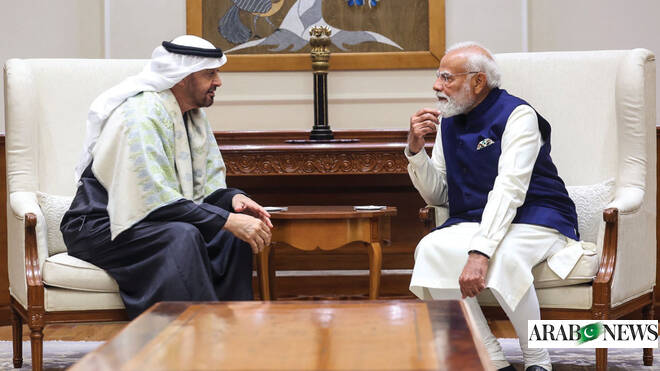
In a decisive move to secure its energy future and diversify economic partnerships, India has signed a landmark $3 billion liquefied natural gas (LNG) supply agreement with the United Arab Emirates. Alongside an ambitious pledge to double bilateral trade to $200 billion by 2032. This high-level deal, forged during a rapid meeting between UAE President Sheikh Mohamed bin Zayed Al Nahyan and Indian Prime Minister Narendra Modi, underscores a strategic shift as New Delhi navigates an elusive trade agreement with its largest partner. The United States, and counters punitive tariffs imposed by the Trump administration. The pact not only cements India as the UAE’s premier LNG customer but also exemplifies a broader foreign policy strategy of building resilient. Multi-aligned economic relationships in an era of geopolitical unpredictability.
The Core Agreement: A Decade of Energy Security
The 10-year LNG supply deal is a cornerstone of this strengthened alliance. Under its terms, commencing in 2028, the Abu Dhabi National Oil Company (ADNOC) will supply LNG to India’s state-owned Hindustan Petroleum Corporation. The agreement, valued at up to $3 billion, is projected to make India the destination for a staggering 20% of ADNOC’s LNG sales by 2029. This long-term contract provides India with critical energy security and price stability. Insulating it from volatile spot markets and diversifying its import portfolio beyond traditional suppliers. For the UAE, it locks in a massive, reliable outlet for its hydrocarbon exports, deepening economic interdependence with a rising Asian giant.
The $200 Billion Vision: Beyond Hydrocarbons
While energy is the immediate driver, the ambition extends far beyond LNG. The goal to elevate bilateral trade from approximately $100 billion in FY2025 to $200 billion by 2032 builds upon the foundational Comprehensive Economic Partnership Agreement (CEPA) signed in 2022. This pact has already catalyzed growth, with the UAE now India’s third-largest trading partner. (after the U.S. and China) and home to 3.5 million Indian expatriates. The expanded trade vision will leverage the CEPA to boost exchanges in services. Digital economy, logistics, food security, and defense, transforming a buyer-seller hydrocarbon relationship into a comprehensive strategic partnership.
The U.S. Context: Diversification as a Response to Uncertainty
This rapid advancement with the UAE occurs against the backdrop of strained and stagnant trade relations with the United States. Since August 2025, India’s exports to the U.S. have been subject to 50% tariffs imposed by the Trump administration, with a broader trade deal remaining elusive. Analysts like Harsh Pant of the Observer Research Foundation note that. “Even with a trade deal [with the U.S.] there is no guarantee that President Trump’s unpredictability would end.” This perceived unreliability is a primary catalyst for India’s proactive outreach to finalize agreements with other nations. Including recent pacts with the UK and Oman and a pending deal with New Zealand
Strategic Analysis: India’s Multi-Alignment in Action
India’s maneuver is a textbook example of pragmatic multi-alignment—cultivating parallel, non-exclusive partnerships to maximize strategic autonomy.
- Risk Mitigation: By securing long-term energy supplies and trade growth with the UAE, India reduces its vulnerability to unilateral U.S. policy shifts and trade pressures.
- Geographic Rebalancing: It strengthens ties in the crucial Middle East, a region vital for energy, diaspora remittances, and security, while also pursuing agreements in Europe (UK) and the Pacific (New Zealand).
- Signal to Washington: The deal demonstrates that India has credible. Attractive alternatives and will not negotiate a U.S. trade agreement from a position of weakness or dependency.
Comparative Strategic Outcomes
The differing trajectories of India’s relationships with the UAE and the U.S. highlight a clear divergence in approach and outcome.
| The UAE Partnership (Accelerating & Deepening) | The U.S. Partnership (Stalled & Contested) |
|---|---|
| Foundation: Built on the 2022 CEPA, providing a clear, rules-based framework for expansion. | Foundation: Lacks a comprehensive trade pact, leaving relations subject to ad-hoc tariffs and political whims. |
| Drivers: Energy security, diaspora ties, geographic proximity, and complementary economic visions. | Drivers: Geopolitical alignment, technology transfer, and access to large markets, but hampered by protectionism. |
| Recent Momentum: High-level political engagement yielding immediate, tangible outcomes (LNG deal, $200B target). | Recent Momentum: Characterized by punitive tariffs (50% on Indian goods) and a deadlocked negotiation process. |
| Strategic Value for India: Provides predictable trade growth, energy security, and a stable partner in a volatile region. | Strategic Value for India: Remains critical but is viewed as increasingly unpredictable, prompting risk diversification. |
The Road Ahead: A New Trade Architecture
The India-UAE agreement is more than a bilateral deal. It is a signal of a reshaping global trade order. As major economies engage in protectionism and weaponize trade policy. Middle powers like India are responding by weaving a denser web of regional and strategic agreements to ensure their growth is not held hostage to any single relationship. For the U.S., the lesson is clear: its traditional partners are actively building alternatives. While the U.S.-India strategic partnership retains profound importance, its economic pillar risks erosion without a predictable and equitable framework. For India, the path forward is one of confident diversification, using agreements like the one with the UAE to build economic resilience and strategic optionality in an uncertain world.
Explore Finance for more updates.

