
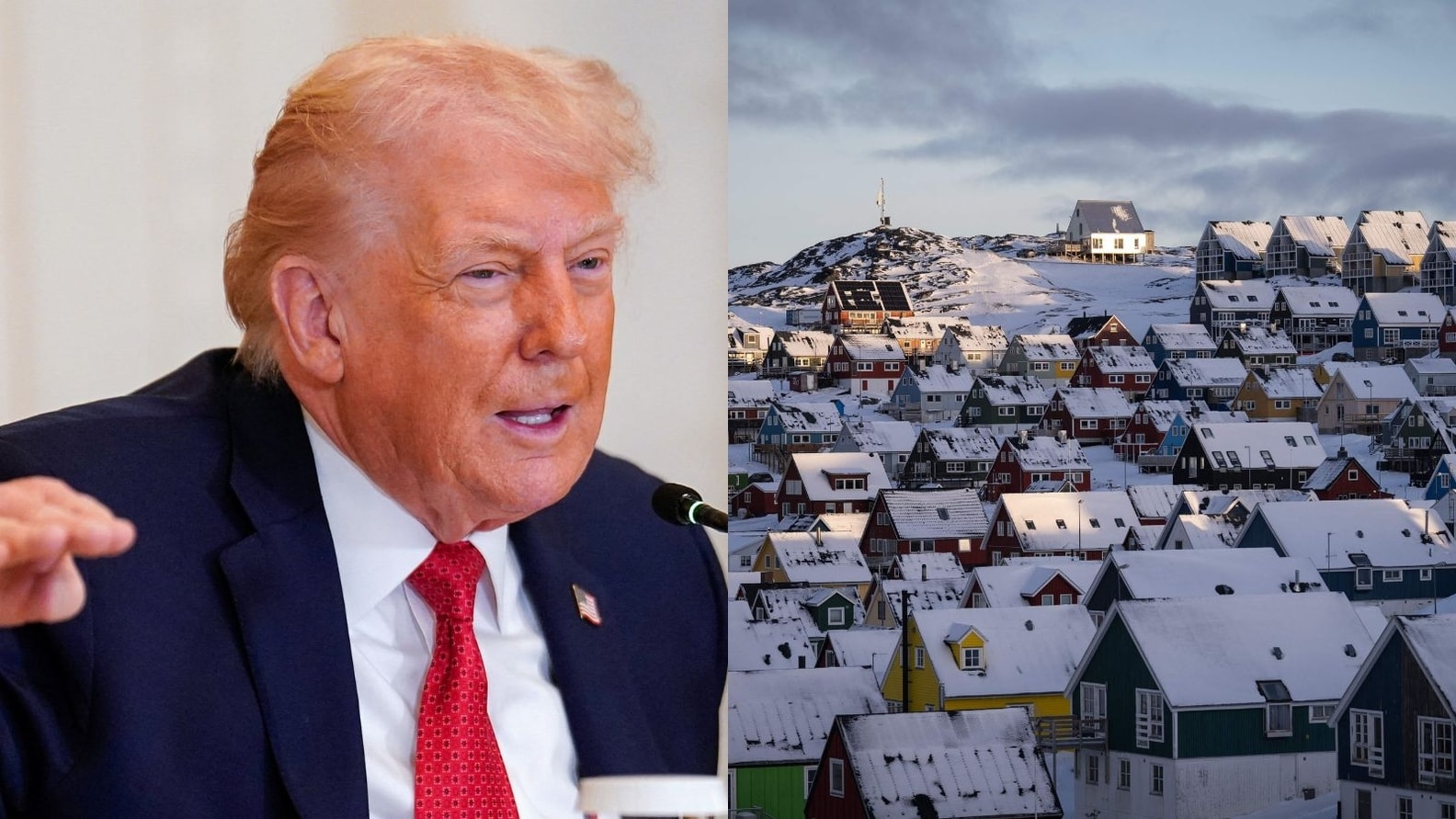
The already strained transatlantic relationship has plunged into a new cycle of retaliatory threats and personal diplomacy, centered on two seemingly disparate issues: the Arctic territory of Greenland and French luxury wines. President Donald Trump has escalated his rhetorical and economic offensive, threatening staggering 200% tariffs on French wine and champagne in response to President Emmanuel Macron’s rejection of a U.S.-led peace initiative. This move comes amidst a broader tariff threat against eight European nations. Including Denmark, Norway, and Germany tied directly to their opposition to his pursuit of purchasing Greenland. These developments, revealed through public statements and a private letter published by Bloomberg, reveal a foreign policy approach where trade, territorial ambition, and personal grievance are becoming inextricably and dangerously linked.
The Greenland Obsession and the Nobel Prize Grudge
The underlying catalyst for the widening rift appears to be Trump’s unrelenting focus on Greenland. A letter to Norwegian Prime Minister Jonas Gahr Store, obtained by Bloomberg, provided a startling insight into the linkage. Trump explicitly connected his aggressive stance to not winning the Nobel Peace Prize, writing: “Considering your Country decided not to give me the Nobel Peace Prize for having stopped 8 Wars PLUS. I no longer feel an obligation to think purely of Peace.” This suggests his geopolitical maneuvers are being influenced by personal pique as much as strategic calculation.
His public justification frames Greenland as a strategic prize in a new Cold War, claiming. “China and Russia want Greenland, and there is not a thing that Denmark can do about it,” while mocking Danish defenses. The proposed solution is a U.S. takeover, with opposition being met with economic punishment.
The Tariff Timeline: A Weaponized Trade Policy
Trump has outlined a clear, escalating tariff schedule targeting eight European nations. (Denmark, Sweden, France, Germany, the Netherlands, Finland, the UK, and Norway):
- February 1: Implementation of 10% tariffs on “any and all goods” from these countries.
- June 1: Automatic escalation to 25% tariffs if no agreement is reached on the Greenland issue.
This represents a significant expansion of existing U.S. tariffs on these allies, which already range between 10% and 15%. The European Union has responded in kind, with capitals discussing retaliatory tariffs of up to $108 billion on American products, setting the stage for a full-scale transatlantic trade war.
The French Front: Champagne as a Political Pawn
The conflict took a sharply personal turn with France. After Macron declined to join Trump’s newly formed “Board of Peace for Gaza” (which includes Vladimir Putin and other leaders), Trump retaliated with the threat of 200% tariffs specifically on French wine and champagne. This move, targeting a symbol of French national prestige and a major export industry. Was framed as leverage: “I’ll put a 200% tariff on his wines and champagnes and he’ll join.” It underscores a tactic of using disproportionate economic pressure to compel diplomatic compliance, treating luxury goods as geopolitical hostages.
The “Board of Peace” and Diplomatic Isolation
The peace initiative itself, announced over the weekend, has become a flashpoint. Its composition including Russia’s Putin and Argentina’s Milei, while excluding key EU leaders appears designed to bypass traditional Western alliances. Macron’s refusal, communicated via text message, and the subsequent tariff threat highlight how Trump is creating new, ad-hoc diplomatic frameworks and punishing those who do not immediately acquiesce.
Analysis: A Strategy of Coercive Linkage
The merging of the Greenland ambition with trade policy and personal grievance creates a volatile and unpredictable diplomatic environment.
| Trump’s Coercive Strategy | European Dilemma & Response |
|---|---|
| Linkage: Tying trade access (tariffs) to geopolitical concessions (Greenland) and diplomatic loyalty (joining initiatives). | Unity vs. Fracture: Must maintain a unified EU front against what is seen as economic blackmail, while individual nations face severe sectoral pain (e.g., French winemakers, German automakers). |
| Personalization: Framing policy around personal slights (Nobel Prize rejection) and rivalries (mocking Macron). | Escalation Calculus: Weighing the cost of retaliation ($108B in tariffs) against the principle of sovereignty and the precedent of ceding to territorial demands. |
| Escalation Dominance: Setting automatic tariff increase deadlines to force negotiation under pressure. | Strategic Patience: Possibly waiting out the U.S. administration, hoping domestic or judicial pressure intervenes before June 1st escalation. |
| Divide and Conquer: Targeting specific countries (France with wine, Germany with auto tariffs) to potentially break EU solidarity. | Seeking Alternative Alliances: Strengthening ties with other global partners as U.S. reliability as an ally is questioned. |
The Path Ahead: Brinkmanship with Allies
U.S. Treasury Secretary Scott Bessent struck a conciliatory note in Davos, expressing confidence that leaders “will not escalate.” However, the mechanism for de-escalation is unclear. The situation presents European leaders with an almost impossible choice: discuss the sovereignty of a willing ally’s territory under threat of economic ruin, or engage in a mutually damaging trade war over a fanciful real estate deal. What began as a geopolitical curiosity the desire to purchase Greenland has metastasized into a full-blown crisis of alliance integrity, proving that in this administration, no foreign policy thread is pulled in isolation.
Explore Finance for more updates

